
What is Specialty Coffee (And Why It's Better)?
“Specialty coffee” was first coined by Erna Knutsen in a 1974 article in the Tea & Coffee Trade Journal. Now, it’s a term commonly used in coffee shops and online to describe coffee that’s exceptionally well-harvested, roasted, and enjoyed. But what does specialty coffee actually mean? What makes it special and different than simple, regular coffee?
This article explains what specialty coffee is, why it’s better than commercial coffee, and how to find options you can enjoy at home. Keep reading to become an expert on specialty coffee!
What is Specialty Coffee?
Put simply, specialty coffee means any coffee that scores 80 points or higher out of 100 when evaluated by a panel of trained expert tasters, often known as Q graders. They perform a process known as cupping, which includes assessing the coffee by sniffing the dry grounds, then the wet grounds, and tasting the coffee once it’s brewed.
Coffees are assessed on a 100-point quality scale based on the Specialty Coffee Association (SCA) cupping standards. The SCA cupping form evaluates 10 key attributes when grading coffee:
Aroma: How the coffee smells; it can be nutty, herby, smoky, or citrusy.
Flavor: The prominent taste characteristics of the coffee, including bitterness, sweetness, saltiness, sourness, and more.
Aftertaste: The lingering flavor notes after swallowing the coffee.
Acidity: How bright or tangy the coffee tastes.
Body: Often referred to as “mouthfeel,” body refers to its tactile feel and weight in the mouth.
Balance: How well the coffee’s attributes complement one another.
Uniformity: The consistency of a coffee’s flavor across several cuppings.
Clean Cup: Also known as the cleaning test, it determines whether the coffee is free of defects. It doesn’t refer to sanitation at all.
Sweetness: The natural sugar-like qualities of the cup, often perceived on the tip of the tongue.
Overall: The grader’s personal impression of the cup.
Each category is rated on a scale of 1–10, resulting in a final coffee score. Anything that falls below 80 is not considered specialty-grade coffee.
Why is Specialty Coffee “Special”? 3 Things That Make it Better Than Commercial Coffee
Now that you know what specialty coffee is, you probably want to know what makes it “special.” You’ve probably noticed it’s a bit more expensive than standard commercial coffee, and several people boast that it’s just better. But why is that?
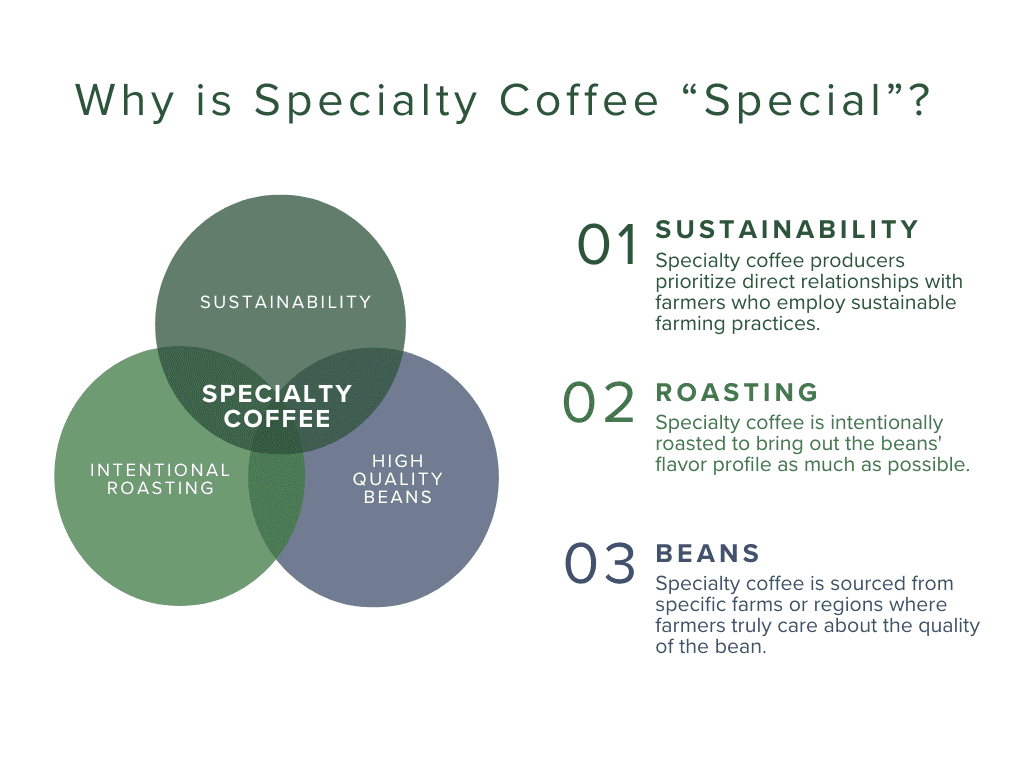
Here are 3 reasons specialty coffee is superior to mass-produced coffee:
Higher Quality Beans
Specialty coffee is grown with great attention to detail and with quality in mind. Commercial coffee, on the other hand, is sourced in bulk with little regard for quality, ultimately prioritizing cost efficiency over how good it is.
Specialty coffee is sourced from specific farms or regions where farmers truly care about the quality of the bean. Many areas have climates ideal for growing coffee beans, allowing you to really taste the unique flavor profile of each environment. These include countries like Ethiopia, Brazil, Kenya, Colombia, Costa Rica, and Guatemala. Commercial coffee often uses blends of beans from several regions for consistency’s sake, but it sacrifices quality and unique flavor profiles in the process.
For specialty coffee, it’s more than just where the beans are grown—it’s also how they’re picked and harvested. Much attention is given to picking the best cherries at peak ripeness. Commercial coffee growers often pick coffee cherries before they’re ripe due to mass production and the pressure to maximize efficiency. However, this sacrifices the coffee's taste and quality. Apart from how they’re selected, specialty coffee beans also boast intense flavor and captivating aromas that match the quality sought by roasters and specialty coffee shops.
2. Intentional Roasting Process
How beans are roasted is another essential step that impacts the specialty coffee process. In all honesty, roasting can make or break the quality and end result of coffee.
It’s common for mass-market coffee roasters to over-roast beans, once again for consistency’s sake. Although it makes it easier for them to turn out beans, it also greatly affects the beans' flavor and aroma. Overly roasted coffee carries strong, often bitter notes that mask the bean's inherent flavor profile. The result? Beans that burn off delicate acids and sugars, making the taste less complex and covering its true, unique notes.
Fortunately, specialty coffee is intentionally roasted to bring out the beans' flavor profile as much as possible. That’s why you’ll typically notice that specialty coffee is lighter-roasted. Why is that? In short, light roasts tend to preserve more of the bean’s original flavors, boasting its unique characteristics derived from origin. That’s why specialty coffee beans from Ethiopia taste entirely different from those harvested in Kenya.
In summary, specialty coffee roasters pay great attention to selecting roast profiles that enhance flavor notes rather than masking them. From bright citrus to nutty chocolate, you’re in for a wild ride with every bag of specialty coffee.
3. Sustainable Practices
Sustainability and fair farming practices are at the top of mind for many specialty coffee roasters. You may notice that specialty coffee is a bit higher in price compared to commercial coffee, and there’s a good reason for it. Not only are you paying for the quality and attention to detail during the entire specialty coffee process, but you’re also investing in beans that are sustainably sourced.
Specialty coffee producers prioritize direct relationships with farmers who employ sustainable farming practices, like paying themselves and their employees a fair wage. Some specialty coffee roasters even visit the farms where they source their coffee, ensuring that the farmers and their employees are treated with dignity.
These direct trade partnerships and sustainable practices may incur higher costs along the way, but ultimately result in better quality beans in the long run. The price of specialty coffee reflects ethical considerations at every step of the process, from production to roasting to brewing.
How to Find Specialty Coffee: 5 Things to Look For
Specialty coffee often meets these criteria:
Freshness
Specialty coffee should have a roast date on the packaging. You should look for beans that are no more than 2 weeks past their roast date. Peak flavor develops within 3–14 days after roasting. It’s important to note that nowadays, specialty coffee roasters can use a process called nitrogen flushing to preserve the beans' flavor for longer. If you find beans that have undergone a nitrogen flush, you can enjoy them for up to 6 months after their roast date, with the flavor profile still intact.
2. Medium to Light Roasted
As stated before, light to medium roasts tend to showcase more of a coffee’s origin-specific flavors and unique character. Dark roasts, by contrast, emphasize roast-driven notes, which can sometimes overshadow those nuances. That said, when produced by reputable specialty roasters (more on that later), even dark-roasted beans can be well-developed and balanced without becoming ashy or one-dimensional.
3. Whole Beans
Whole coffee beans are often a sign of a specialty coffee roaster. Unlike pre-ground coffee, whole beans hold onto their flavor, aroma, and freshness much longer. That’s because the outer layer of the bean helps protect the natural oils from oxygen and moisture, which can quickly degrade the coffee's quality once it's ground.
4. Coffee With a Clear Origin
Many commercial coffee producers don’t disclose where their beans come from because they’re often blends sourced from multiple regions. While this doesn’t always mean the coffee is produced unsustainably, it does make it harder to trace farming practices. In contrast, coffees with a clearly stated origin typically emphasize transparency and accountability in sourcing—traits common to specialty coffee.
5. Reputable Roaster
Before purchasing a bag of beans, check out who’s roasting them. Many specialty coffee roasters and shops share where they source their beans, who the farmers are, and the sustainable practices they employ. If information is vague or if the roaster has poor reviews, it most likely doesn’t meet the standards of specialty coffee.
Try Specialty Coffee at Inicio Coffee Company
By now, you’re probably intrigued by specialty coffee. Whether you didn’t know what specialty coffee was before this article or you’re a self-proclaimed coffee connoisseur, there’s still so much of the coffee world left to discover.
If you want to start (or continue) your specialty coffee journey, stop by Inicio Coffee Company for a cup of freshly brewed specialty coffee. We’re a specialty coffee shop in San Fernando Valley that uses Talitha beans in every drink. Talitha Coffee is certified by the Specialty Coffee Association and recognized as a reputable roaster in Southern California. They also empower and liberate survivors of trafficking at every step of their specialty coffee process, which is something we’re really passionate about at Inicio. If you want to try specialty coffee that supports a greater cause, visit Inicio Coffee in Pacoima, California.